Cellular energy
Reviews name cytochrome c oxidase, in mitochondria, as a main absorber of red and near-infrared light, with a rise in ATP described as the leading hypothesis.

Class IV laser therapy · Regenerative care
Pain that will not quit. The next conversation is another injection, or a surgery you are not ready to have. Class IV laser therapy uses concentrated light — photobiomodulation — on the tissue that hurts. Trials report less pain and better function. The session is light and warmth. No incision. No needle.
The clinical trials are about pain and function. The mechanism pages describe what photobiomodulation research says the light is doing in the tissue.
Reviews name cytochrome c oxidase, in mitochondria, as a main absorber of red and near-infrared light, with a rise in ATP described as the leading hypothesis.
A class 4 laser study measured higher forearm blood flow, and FDA clearances in this category list a temporary increase in local blood circulation.
Photobiomodulation reviews describe a reduction in inflammation, and a nerve review describes slower conduction after non-ablative laser irradiation.
-1.01 Mean difference in pain versus control across 736 people in 11 musculoskeletal trials (95% CI -1.28 to -0.74). (Song et al., 2018)
-14.1 mm Pooled visual analog scale change for neck pain at the end of treatment, 17 trials (95% CI -18.4 to -9.7). (de la Barra Ortiz et al., 2024, neck)
-27.7 Adjusted WOMAC difference, laser plus exercise versus ultrasound plus exercise, still present 12 weeks later (95% CI -39.0 to -16.5). (Ninlerd et al., 2026)
Each section stays with the condition it measured: the score, the follow-up, and the link to the paper.
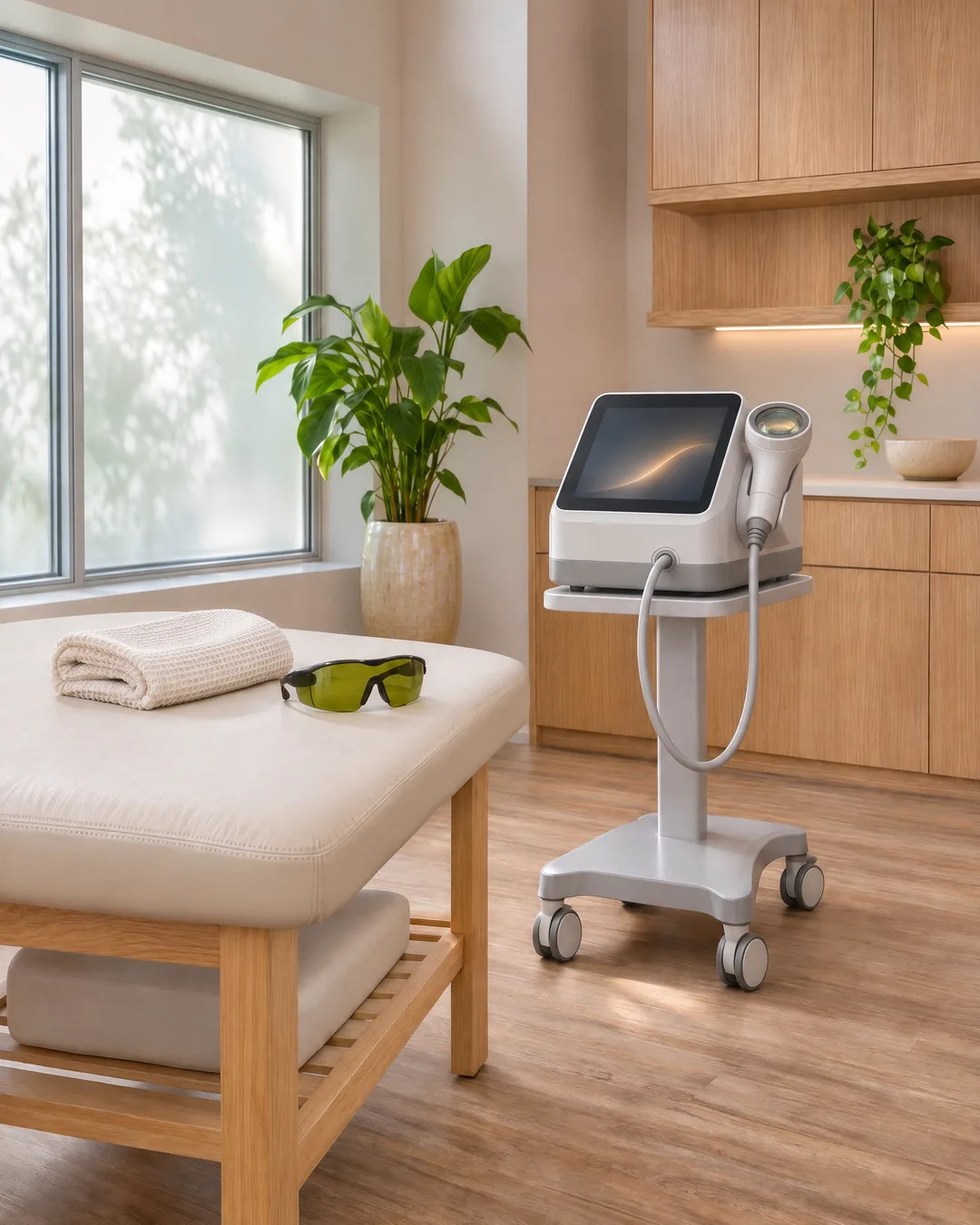
Cleared devices in this category are built to raise tissue temperature. A physician describing class IV treatment said the patient may feel the heat from the laser.